
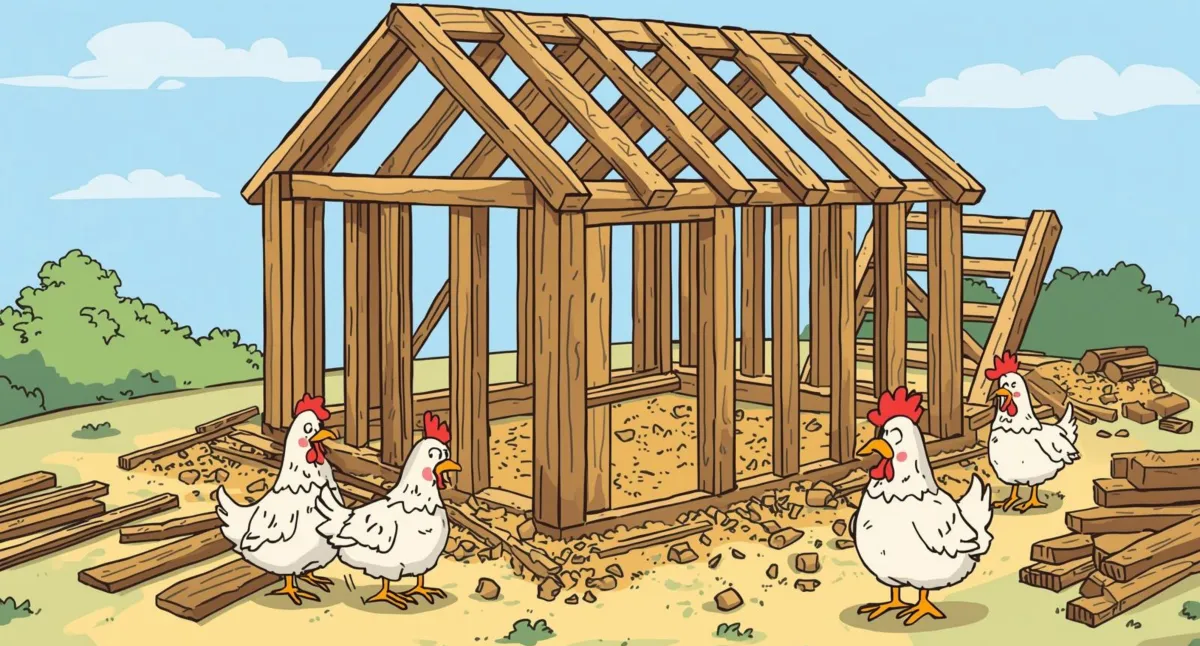
How to Build a Custom Chicken Mansion: Repurposing a Prefab for a 12-Hen Flock
If you’ve ever fallen for a "fits 10 chickens" marketing claim only to realize it barely fits 10 stuffed animals, you are my people. I started with a Tucker Murphy Pet coop from Wayfair, and while it looked cute online, my eight Rhode Island Reds were basically living in a studio apartment with no personal space. We had "roost wars," feather pecking, and a lot of grumpy hens.
The math didn't add up. Most experts agree regular-sized birds need 4 square feet in the coop and 10 square feet in the run to stay sane. My prefab was giving them about 2.25 square feet each. It was time for a "Chicken Mansion" upgrade.
Quick Guide: What Your Flock Actually Needs
How much space do 12 chickens need in a coop? You should allocate at least 48 square feet of coop space for 12 regular-size chickens
How big should a chicken run be for 12 birds? A flock of 12 requires a minimum of 120 square feet of secure outdoor run space.
Why does coop size matter? Adequate space promotes health, reduces aggressive behaviors like feather pecking, and ensures consistent egg production.
If you’re still scratching your head over the math for your own flock or aren't sure what size to build, check out my previous blog here where I break down the "sizing secret" and the real math coop manufacturers won't tell you.
The Frankenstein Build: Old Coop Meets New Ambition
I didn’t want to trash the old coop entirely, so I played Dr. Frankenstein and repurposed the walls and run screens. I expanded the footprint to 8 feet wide by 4 feet deep.
The DIY Reality Check:

Framing: I used 1x4s to frame it out. If I’m being honest? If I did it today, I’d go with 2x4s for more muscle. I’ll probably swap those out as I make improvements later, but for now, it holds.
The Floor (My favorite hack): I used painted plywood but covered it in peel-and-stick tile. If you aren’t doing this, you’re working too hard. It makes scraping out the coop actually satisfying instead of a chore.
The Roof: This isn’t just a piece of wood. I used sheathing and roll roofing materials, and a drip edge. I want my girls dry, not soggy.
The Custom Suite: I used the 12"x36" nesting box that came in the original coop and attached it to my coop so that it bumps out from the side, complete with its own door for easy egg retrieval.

The Run: 16 Feet of Freedom
The run is where the magic happens. I extended it 16 feet along my existing fence line, using the fence itself for support.
I lined the bottom 2 feet with cedar boards all the way around and then went heavy on the hardware cloth to keep the local predators at bay. The coolest part? I cut a "grazing door" directly into my fence at the far end of the run. Now, I can just pop it open and let them roam the yard when I'm home.
I even recycled the old coop's roof to create a dry, covered "cafeteria" area in the run for their feeders.
The Finishing Touches
To keep this place running like a five-star hotel, I added a few upgrades:
The Sideways Door: I use an automatic coop door that slides sideways and has a safety sensor. No "guillotine" accidents for my slow-moving hens.
The Comforts: We’ve got nesting pads (the fluffy ones, because my girls are bougie) and a smart heater for those chilly nights.
Sand Bedding: I’ve officially retired from the "straw life." Sand is easier to scoop and keeps the smell down significantly.
Upgrading from a prefab fail to a custom build was the best thing I ever did for my flock. They’re happier, I’m less stressed, and the yard looks like a high-end poultry resort.
As an Amazon Associate I earn from qualifying purchases.
FAQ
How many chickens can you actually fit in a 4x8 coop? A 4x8 coop provides 32 square feet of floor space. Following the expert guideline of 4 square feet per regular-size bird, a 4x8 coop is the ideal minimum size for 8 chickens. While I currently house 12 birds in my custom-expanded 4x8 setup, the massive 144-square-foot run and elevated "bonus space" are what keep the peace.
How many nesting boxes do I need for 12 chickens? The general rule is to provide one nesting box for every four chickens. For a flock of 12, you should have at least 3 nesting boxes to prevent squabbles and egg breakage. My build features a custom 12"x36" exterior box that gives them plenty of room to lay comfortably.
What is the best size for a chicken perch? For regular-size breeds like Rhode Island Reds or Orpingtons, the ideal perch has a diameter of 1.5 to 2 inches. You should provide at least 1 foot of linear perch space per bird to ensure everyone has a spot to roost at night.
Can I repurpose a too-small prefab coop instead of starting over? Absolutely. You can reuse the walls, roof, and framing from a smaller coop to act as the foundation for a larger build. In my "Mansion" build, I repurposed about 75% of my original Wayfair coop materials, saving money while finally meeting the 4 square feet per bird rule.
Why should I elevate my chicken coop? Raising a coop about 2 feet off the ground provides several benefits: it creates natural shade for the birds in the run, offers an extra area for dust bathing, and makes predator protection much simpler. Plus, it means a full-size human door can lead right into the run, so you aren't crawling through tiny holes to clean.
What are the best accessories for a 12-hen coop? To keep a larger flock healthy, I recommend an automatic chicken coop door with a safety sensor to prevent accidents, and nesting pads to keep eggs clean. For bedding, sand is much easier to maintain than straw in a high-traffic 12-hen mansion.

